Echoes of the Divine: Parallels Between Olodumare and the Gnostic Pleroma
The Yoruba people of West Africa have a rich, complex cosmology, one that echoes with concepts of divine emanations and a multifaceted universe. Their supreme deity, Olodumare, also known as Olorun, the ‘Owner of the Sky,’ stands as a powerful figure, embodying the source of all creation and the ultimate authority. Strikingly, Olodumare’s role and attributes share fascinating parallels with the Gnostic concept of the Pleroma, a divine realm of emanations and a source of spiritual knowledge. This article explores these intriguing connections, examining how both Olodumare and the Pleroma embody a complex conception of the divine, revealing a fascinating intersection of African and Gnostic thought.
Olodumare: The Sky’s Sovereign
Olodumare’s position within Yoruba cosmology is that of the supreme creator and ultimate source of authority. Olodumare is not usually depicted as either male or female, but is the embodiment of the sky itself, its vastness and power mirroring the infinite expanse of the heavens. While Olodumare is rarely directly worshipped, Olodumare’s influence is pervasive. Other Yoruba deities, known as orishas, are considered to be Olodumare‘s emanations, each embodying specific aspects of Olodumare’s being and the natural world. This hierarchical structure suggests a complex, multi-faceted divine reality emanating from Olodumare.
The Gnostic Pleroma: A Tapestry of Divine Emanations
The Gnostic Pleroma, in contrast, is a realm of divine beings, each representing a different aspect of the divine essence. This realm is often visualised as a series of concentric circles, with each emanation embodying a specific attribute such as wisdom, power, or love. This system of emanations reflects a gradual unfolding of divine qualities, culminating in the creation of the physical world.
Points of Convergence
Despite their distinct origins, both Olodumare and the Pleroma share crucial similarities:
* **Emanation:** Both systems emphasise the concept of divine emanations as a means of understanding the complex nature of the divine. Olodumare’s influence is manifested through the orishas, just as the Pleroma’s divine essence is expressed through its emanations.
* **Hierarchical Structure:** Both systems demonstrate a hierarchical structure, with the supreme being (Olodumare or the original divine source) at the top, followed by a series of lesser deities or emanations. This hierarchical arrangement reflects the gradual unfolding of divine power and knowledge.
* **Source of Creation:** Both Olodumare and the Pleroma are ultimately responsible for the creation of the physical world. Olodumare’s power is invoked in rituals and ceremonies, while the Pleroma’s emanations are believed to have played a role in shaping the material universe.
The Significance of the Parallels
The parallels between Olodumare and the Pleroma are significant for several reasons:
* **Cross-Cultural Dialogue:** These connections demonstrate the possibility of cross-cultural dialogue and the resonance of certain concepts across diverse cultures and religions. The similarities between Yoruba and Gnostic thought suggest a universal human need to comprehend the divine and its influence on the world.
* **Alternative Perspectives on Divinity:** Both systems offer alternative perspectives on the nature of the divine, moving beyond simplistic monotheistic models. The complex, multifaceted nature of Olodumare and the Pleroma highlights the richness and diversity of human spiritual experiences.
* **Understanding the Divine:** Examining these parallels can enhance our understanding of the divine, prompting us to ponder the nature of creation, the interconnectedness of the universe, and the role of human beings within a larger cosmic framework.
The parallels between Olodumare and the Gnostic Pleroma are a fascinating testament to the human search for meaning and the power of diverse spiritual traditions to illuminate our understanding of the divine. As we continue to explore these connections, we gain a richer appreciation for the complexity of human belief and the universality of the human quest for spiritual truth.
—
For more information visit:
https://www.learnreligions.com/yoruba-religion-4777660
https://en.wikipedia.org/wiki/Yoruba_religion
https://www.newworldencyclopedia.org/entry/Santeria
THE YUROBA DEITY OSUN
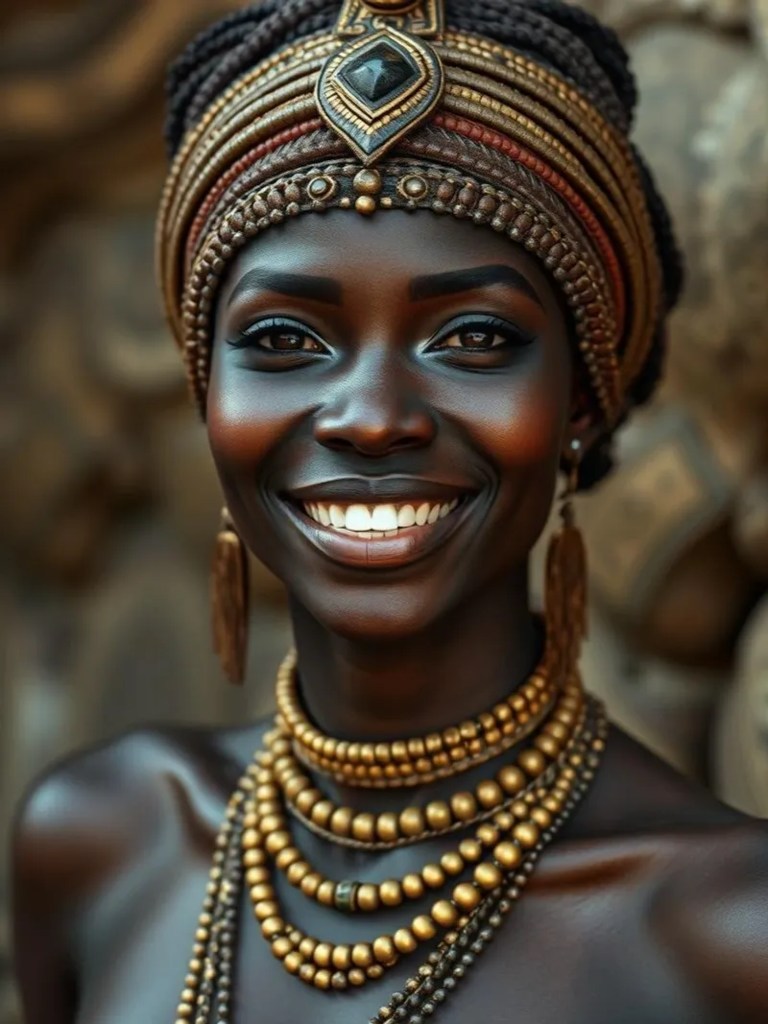
A Symbol of Love, Beauty and Fertility
In the pantheon of Yoruba deities, Osun holds a prominent place as the goddess of love, beauty, and fertility. She is the embodiment of femininity, grace, and sensuality. Worshipped primarily in Nigeria, Benin, and Togo, Osun’s influence extends beyond her geographical origin, inspiring artists, authors, and musicians worldwide.
Origin and Symbolism
Osun’s origins are shrouded in myth and legend. She is believed to have emerged from the Osun River, which flows through the city of Osogbo in Nigeria. The river is considered sacred to her, and its waters are believed to possess healing and life-giving properties.
Osun is often depicted as a beautiful and serene woman with a golden crown and ornate jewelry. She holds a mirror, symbolising admiration, and a fan, representing her power to fan away evil spirits and bring good fortune.
Domains and Attributes
As the goddess of love, Osun is invoked for blessings in love, marriage, and childbirth. She is believed to possess the power to grant wishes related to romance and relationships.
Her domain also encompasses fertility. Osun is associated with the procreation of humans, animals, and plants. People pray to her for healthy pregnancies, bountiful harvests, and the growth of all living things.
Worship and Rituals
Osun is worshipped through elaborate rituals and ceremonies that incorporate singing, dancing, and offerings. Her devotees are known as ‘Olorisha Osun’ and are often involved in divination and spiritual healing practices.
During festivals in her honour, worshippers gather at the Osun River to make offerings and seek blessings. They sing, dance, and offer gifts such as honey, coconuts, and jewelry. It is believed that these offerings bring favour upon the devotees.
Symbolism and Legacy
Beyond her specific attributes, Osun represents the divine feminine and the importance of love, beauty, and fertility in human life. She reminds us of the power of self-love, creativity, and the cycle of life.
Osun’s legacy continues to inspire and empower women around the world. She is a symbol of strength, grace, and the transformative power of love and self-acceptance. Her story teaches us that even in a male-dominated world, the feminine divine has its own distinct and essential role to play.
Oshunmare: The Rainbow Goddess of the Yoruba
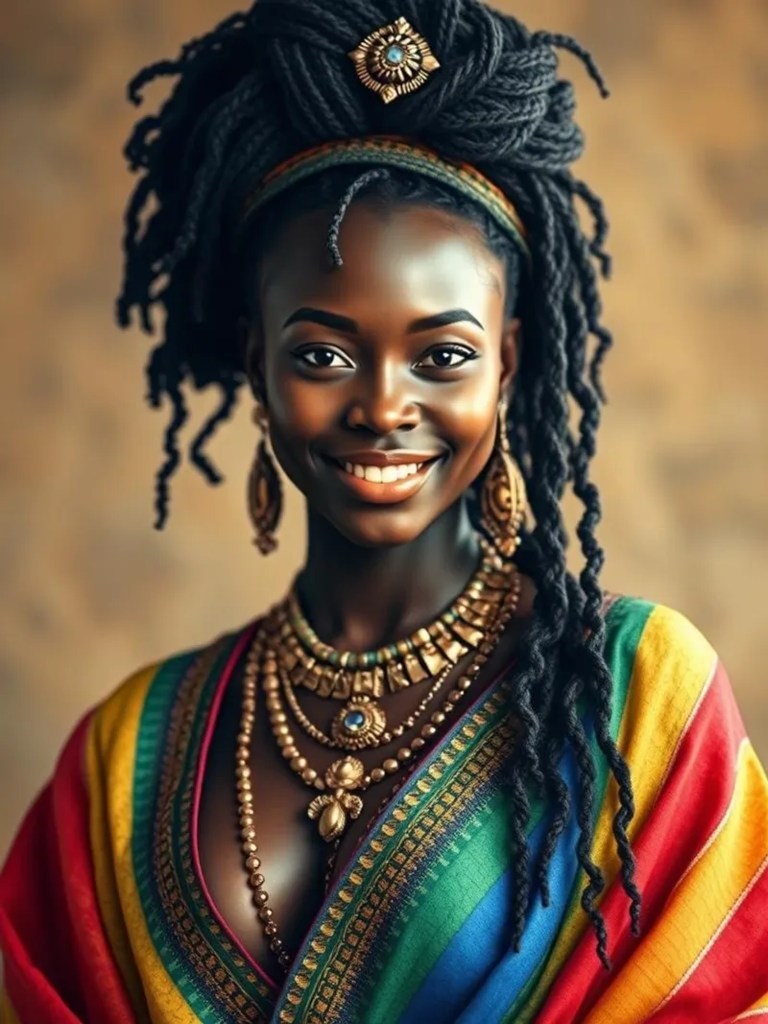
The Yuroba Iris
In the vibrant tapestry of Yoruba mythology, Oshunmare emerges as a captivating deity, embodying the ethereal beauty and transformative power of the rainbow. She is revered as the goddess of the rainbow, rivers, beauty, prosperity, and fertility.
Origins and Nature
Oshunmare is believed to have emerged from the depths of the primordial ocean alongside the other Orisha (deities). She is often depicted as a beautiful maiden, adorned in iridescent robes that shimmer with the colours of the rainbow. Her presence is said to bring joy, healing, and abundance to all who behold her.
Symbolism
The rainbow, Oshunmare’s sacred symbol, represents the bridge between heaven and earth. It symbolises the connection between the physical and spiritual realms and the harmony between nature and humanity. The rainbow’s arch is also said to represent the path to prosperity and abundance.
Domains and Attributes
Oshunmare presides over the realm of rainbows, rivers, and all water bodies. She is believed to have the power to control the flow of water and bring both rain and storms. As the goddess of beauty, she inspires creativity, art, and self-expression. Her prosperity attribute manifests itself in the form of wealth, material success, and fertility.
Worship and Rituals
Oshunmare is a popular deity in Yoruba religion and is often invoked to bring blessings of prosperity, healing, and fertility. Her devotees typically wear white or pastel-coloured clothing and adorn themselves with rainbows. Rituals in honour of Oshunmare involve chanting, drumming, and offerings of flowers, fruits, and honey.
Legacy and Cultural Significance
Oshunmare remains an important figure in Yoruba culture. Her image is found in art, music, and dance, and her name is invoked in prayers and blessings. She represents the beauty, diversity, and transformative power of life. Her rainbow symbol continues to inspire hope, joy, and the belief in the interconnectedness of all things.
Oshunmare, the goddess of the rainbow, embodies the essence of beauty, prosperity, and the interconnectedness of the physical and spiritual realms. Her presence brings joy, healing, and abundance, reminding us that even in the midst of diversity, there is harmony and the promise of a brighter future.
Prayer to Olodumare-Olorun
Olodumare, mo ji loni. Mo wo’gun merin aye.
Creator, I greet the new day. I greet the four directions that create the world.
Igun ‘kini, igun ‘keji, igun ‘keta, igun ‘kerin Olojo oni.
The first corner, the second corner, the third corner, the fourth corner are owners of the day.
Gbogo ire gbaa tioba wa nile aye. Wa fun mi ni temi. T’aya -t ‘omo t’egbe – t – ogba,
They brought us the good fortune that sustains us on earth. They bring me all things that sustain my spirit,
wa fi yiye wa. Ki of f’ona han wa. Wa fi eni -eleni se temi,
With you there is no failure, we praise the road you created, nothing can block the power of the Spirit.
Alaye o alaye o. Afuyegegege meseegbe. Alujonu eniyan ti nf’owo ka le.
We praise the Light of the Earth; it sustains the abundance of Creation.
A ni kosi igi meji ninu igbo bu obi. Eyiti o ba ya’ko a ya abidun – dun — dun — dun. Alaye o, alaye o.
It brings us the food of the forest. It brings us the sweet things in life. We praise the Light of the Earth; we praise the Light of the Earth.
Ase.
May it be so.
Source:



 Worldwide Temple of Aurora