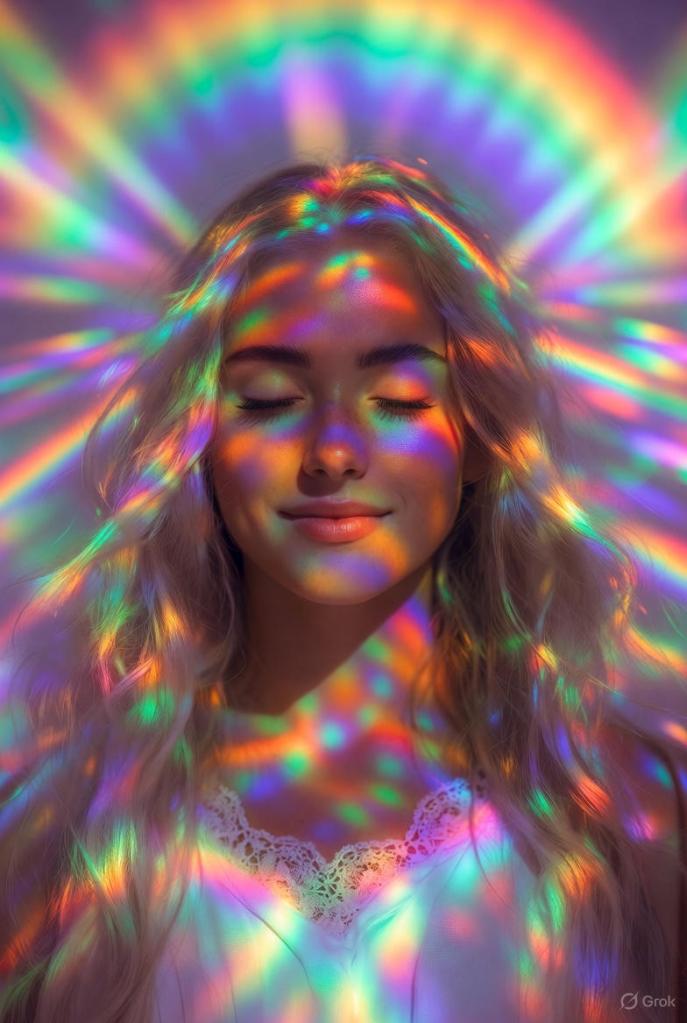
The Divine Feminine: Psilocybin’s Insights into the Mystical
In a groundbreaking series of recent experiments, researchers have made a profound discovery related to the mystical experiences facilitated by psilocybin, the active compound found in certain varieties of psychedelic mushrooms. When participants were given psilocybin and guided through intentional practices aimed at inducing deeply altered states of consciousness, a striking pattern emerged: for the vast majority, these experiences featured encounters with a divine presence that overwhelmingly took on a feminine form.
This finding resonates with the religious and spiritual traditions of many cultures, both ancient and contemporary, which recognise the divine feminine as an integral aspect of the ultimate reality. Across the globe and throughout history, figures such as the Mother Goddess, the Dawn Goddess, Isis, Kali, Mary, and the Black Madonna have personified this sacred feminine principle.
Indeed, the concept of the divine feminine has deep roots in human spirituality. In many indigenous and shamanic traditions, the feminine represents receptivity, nurturance, and the life-giving forces of nature. This archetype appears in the form of the Earth Mother, the Crone, and the Virgin across various belief systems, often embodying the cycles of birth, growth, decay, and transformation.
The psilocybin studies offer a fascinating convergence of scientific inquiry and spiritual insight. By systematically inducing mystical experiences and analysing the narratives of participants, these experiments provide empirical evidence for the widespread appearance of the divine feminine. This challenges the assumption that masculine or androgynous representations of the divine are the norm, suggesting instead that the feminine principle is a fundamental and ubiquitous aspect of the human experience of the sacred.
Moreover, the notion that psilocybin facilitates encounters with a feminine divine Presence may hold important implications for our understanding of spirituality, consciousness, and the human psyche. It could be argued that the abundance of feminine manifestations in these experiences reflects an innate, collective aspect of the human mind that yearns for connection with a nurturing, life-affirming source.
In light of these findings, it is worth considering the potential therapeutic and transformative potential of engaging with the divine feminine. By explicitly acknowledging and embracing this archetypal figure, individuals may gain deeper insights into their own inner world, foster greater self-awareness and compassion, and potentially experience shifts in their existential worldview and sense of purpose.
Ultimately, the psilocybin research offers a powerful reminder of the universal, transcendent aspects of the human experience. By affirming the centrality of the divine feminine in our spiritual journeys, we may come to better understand ourselves and our place within the grand tapestry of existence. As we continue to explore the mysteries of consciousness and the nature of the sacred, we can do so with a newfound appreciation for the multifaceted, inherently feminine dimensions of the divine.
—
See also:


 Worldwide Temple of Aurora